



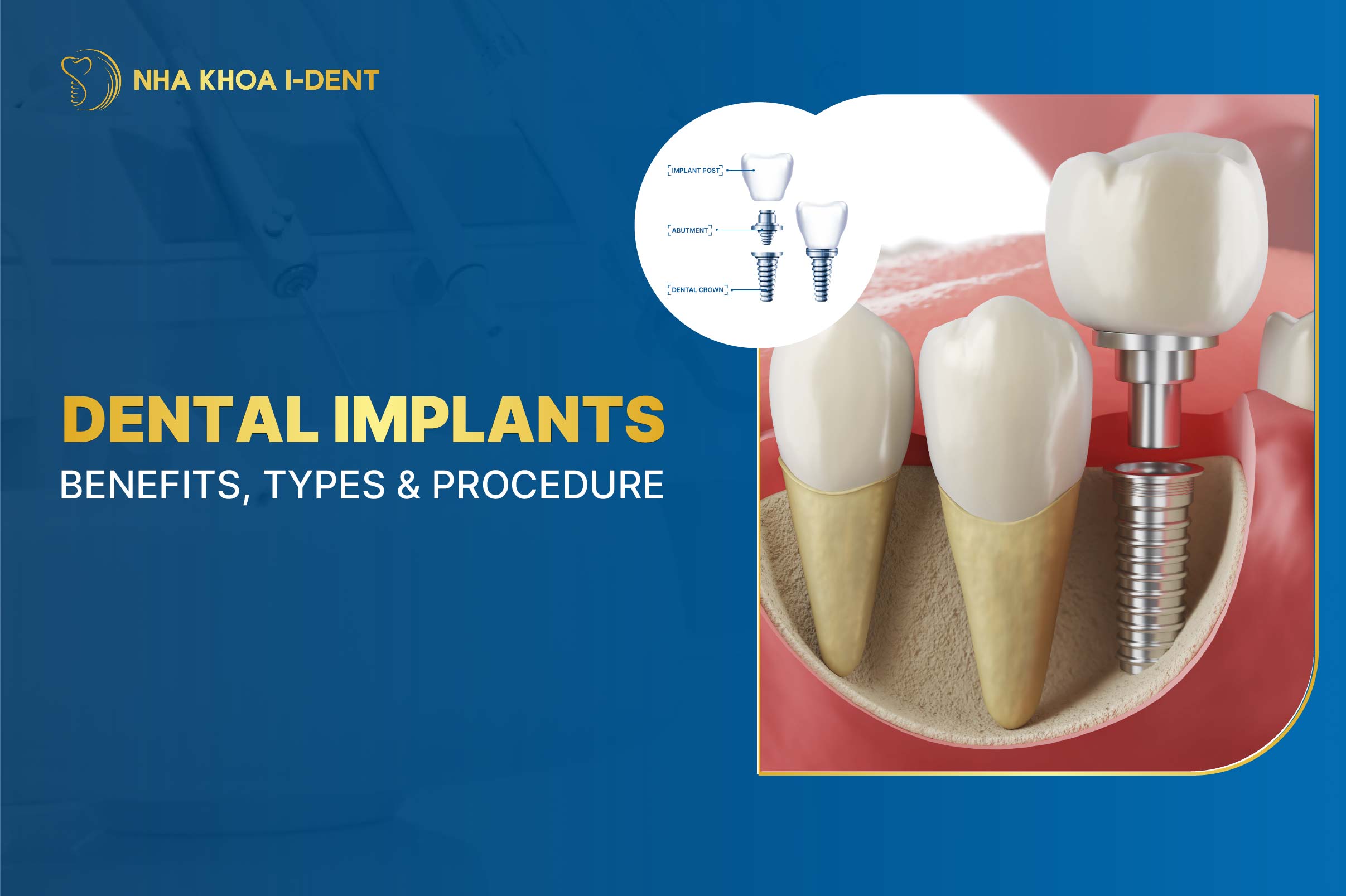

Dental Implants: Benefits, Types And Procedure

Clinical advisor:TS.BS.CKII Nguyễn Hiếu Tùng
- Director of I-Dent Dental Clinic
- 10 years of training in France - over 10,000 successful implant cases
- Medical practice license No. 0002468/TG – CCHN
Listen to this article
10 min 13 secOpen audio player
Dental implants are a modern solution designed to replace missing tooth roots with strong, screw-like posts that support natural-looking artificial teeth. They are an excellent option when dentures or bridges are uncomfortable or no longer effective, especially in cases where there isn’t enough natural tooth structure for support. Depending on your jawbone condition and treatment plan, the process may involve multiple stages, allowing the implant to fuse securely with the bone. This integration ensures long-lasting stability, making dental implants one of the most reliable and functional tooth replacement options available today.
1. What Are Dental Implants?
Dental implants are a permanent tooth replacement solution designed to mimic the structure and function of natural teeth. They consist of small, biocompatible posts typically made of titanium that are surgically placed into the jawbone to act as artificial tooth roots. Once in place, these implants provide a strong and stable foundation for replacement teeth such as crowns, bridges, or even full-arch restorations.
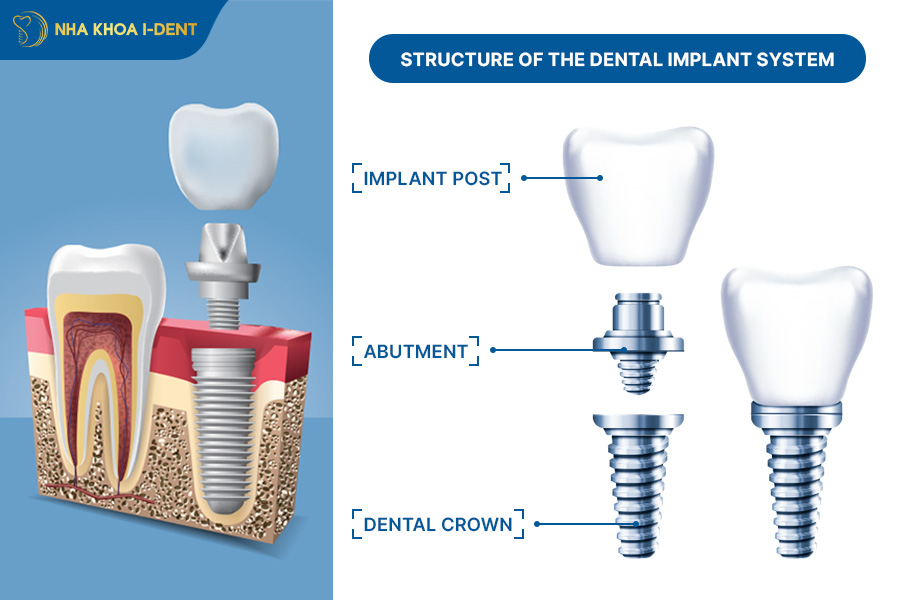
A complete dental implant system usually includes three main components:
- Implant post: A screw-like structure inserted into the jawbone to replace the missing tooth root
- Abutment: A connector that links the implant post to the final restoration
- Dental crown: The visible part of the tooth, custom-made to match your natural teeth in shape and color
What makes dental implants unique is their ability to integrate with the jawbone through a process called osseointegration. Over time, the bone fuses with the implant post, creating a secure and long-lasting base that functions much like a natural tooth root.
Dental implants not only restore the appearance of your smile but also help maintain jawbone health, improve chewing ability, and provide long-term stability that other tooth replacement options may not offer.
2. Benefits of Dental Implants
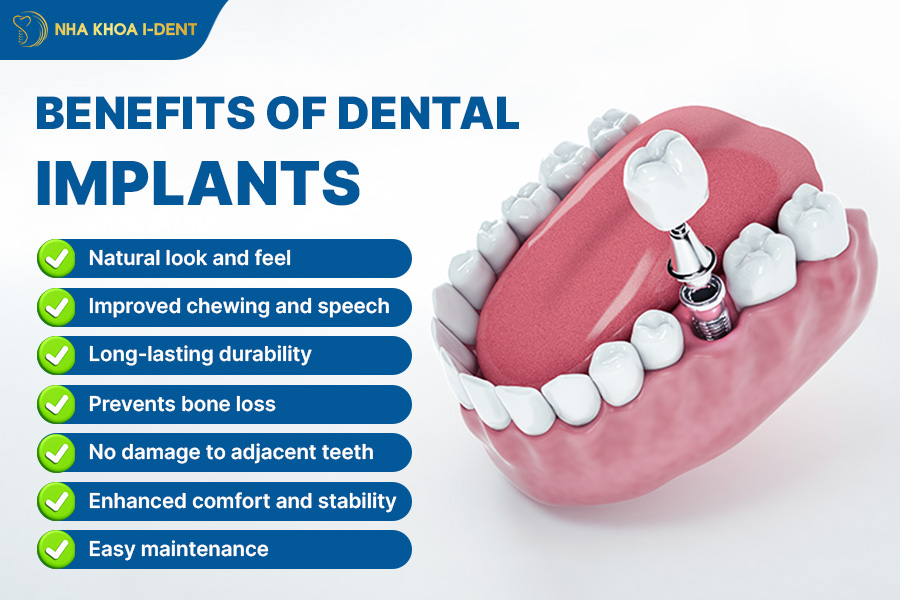
Dental implants offer a wide range of advantages that make them one of the most effective and long-lasting solutions for replacing missing teeth. Unlike traditional options, implants are designed to restore both function and aesthetics while supporting long-term oral health.
- Natural look and feel: Dental implants are custom-designed to match the color, shape, and size of your natural teeth, helping you achieve a seamless and confident smile.
- Improved chewing and speech: Because implants are securely anchored in the jawbone, they function like real teeth—allowing you to eat your favorite foods and speak clearly without discomfort or slipping.
- Long-lasting durability: With proper care, dental implants can last 25 years or even longer, making them a cost-effective solution over time.
- Prevents bone loss: Implants stimulate the jawbone just like natural tooth roots and help to prevent bone deterioration that often occurs after tooth loss.
- No damage to adjacent teeth: Unlike dental bridges, implants do not rely on neighboring teeth for support, preserving the health of surrounding teeth.
- Enhanced comfort and stability: Since implants are fixed in place, they eliminate the discomfort and inconvenience often associated with removable dentures.
- Easy maintenance: Caring for dental implants is simple regular brushing, flossing, and dental check-ups are all that’s needed to keep them in good condition.
3. Types of Dental Implants
Dental implants come in several types, each designed to address different clinical needs, jawbone conditions, and treatment goals. The most common options include endosteal implants, subperiosteal implants, full-arch solutions like All-on-4 or All-on-6, and mini dental implants. Understanding these types can help you and your dentist choose the most suitable approach for your specific situation.
3.1. Endosteal implants
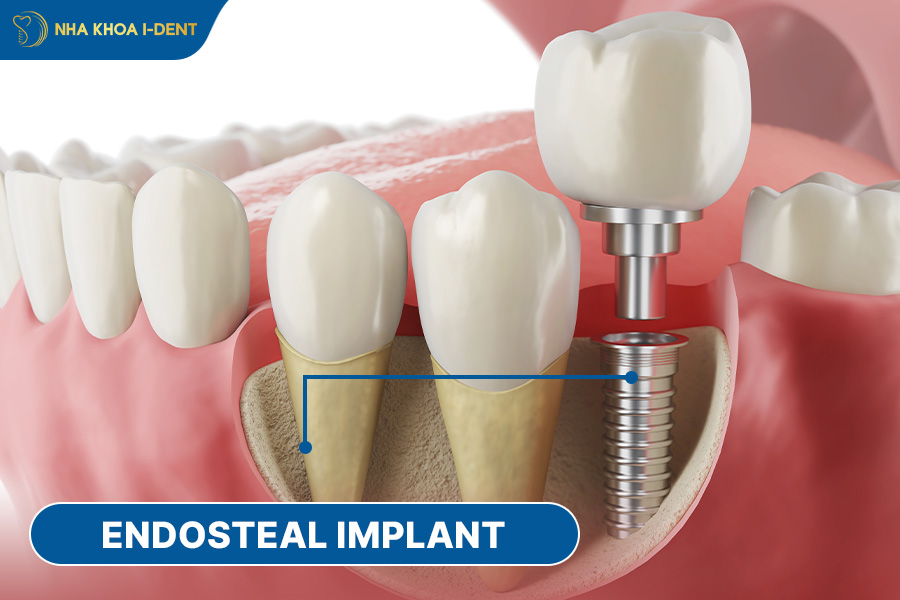
Endosteal implants are the most widely used type of dental implant. They are placed directly into the jawbone and typically shaped like small screws made of titanium. This option is ideal for patients with sufficient bone density and offers excellent stability and long-term success. Once healed, they provide a strong foundation for single crowns, bridges, or full-arch restorations.
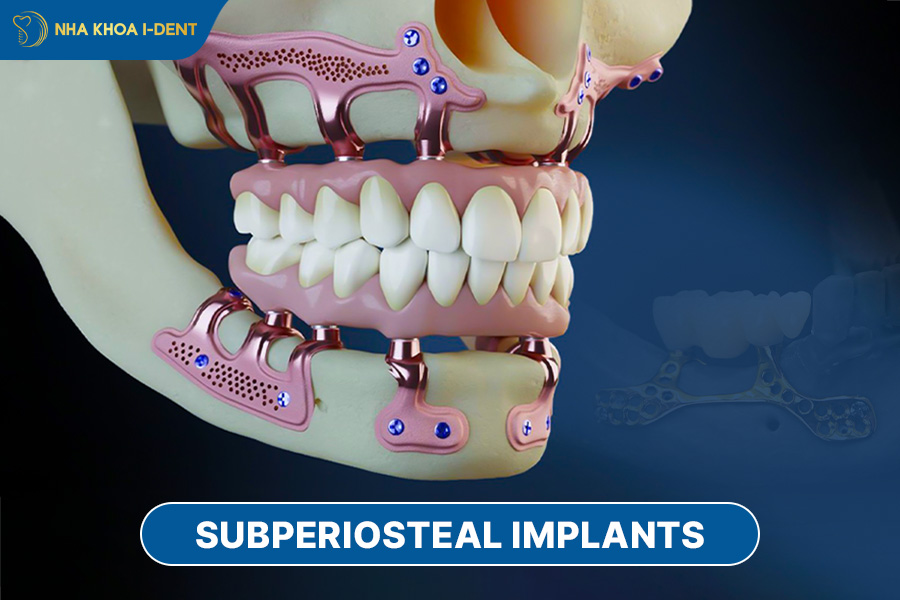
3.2. Subperiosteal implants
Subperiosteal implants are positioned on top of the jawbone but beneath the gum tissue. Instead of being embedded into the bone, they rest on a metal framework that supports the artificial teeth. This type is often recommended for patients who do not have enough healthy jawbone and prefer to avoid bone grafting procedures.
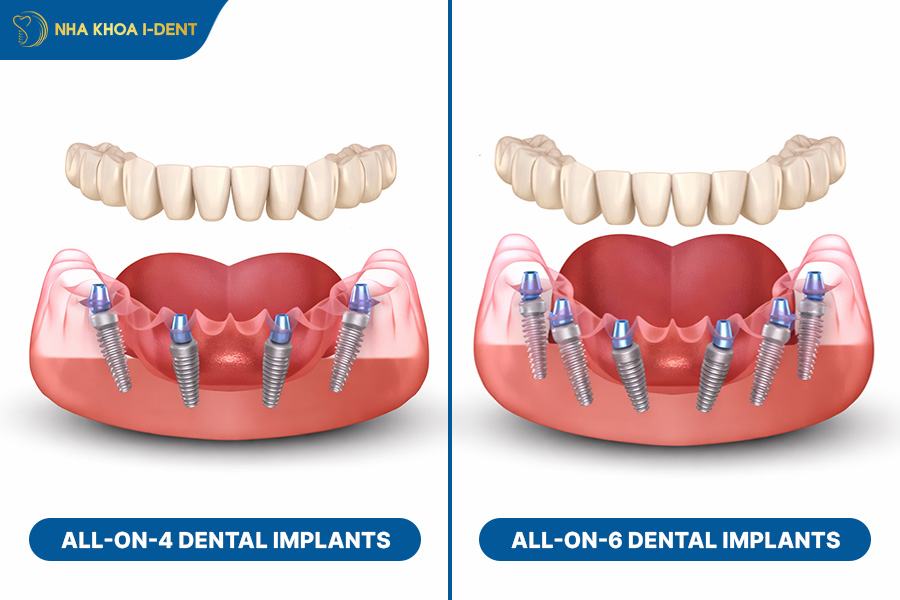
3.3. All-on-4 / All-on-6 dental implants
These full-arch solutions are designed for patients who have lost most or all of their teeth. By using four or six strategically placed implants, a full set of teeth can be supported securely. This approach reduces the number of implants needed while still providing strong support, improved function, and a natural appearance—often with a shorter treatment timeline compared to placing individual implants for each missing tooth.
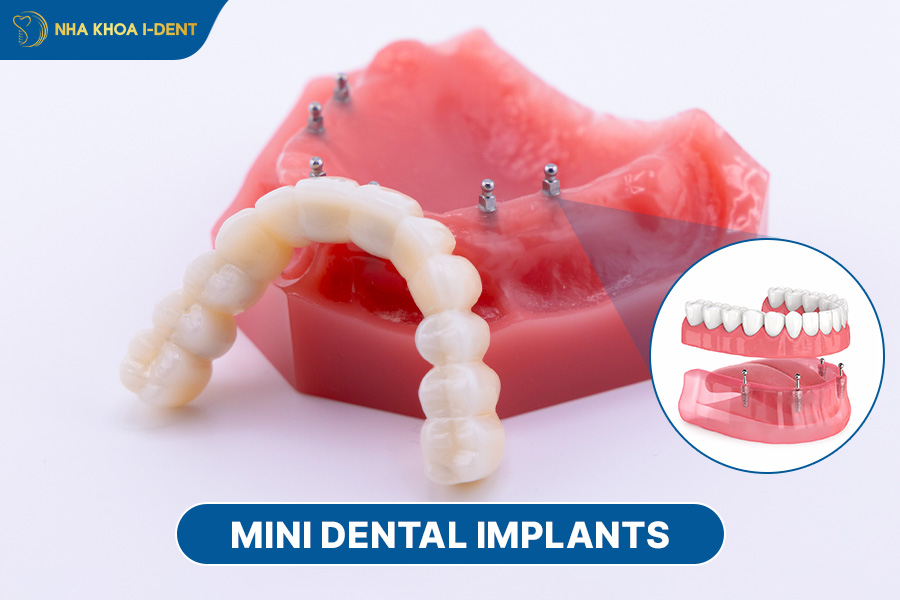
3.4. Mini dental implants
Mini dental implants are smaller in diameter than traditional implants and are typically used in cases with limited bone volume or for stabilizing dentures. They involve a less invasive procedure, shorter healing time, and may be a more affordable option. However, they are usually recommended for specific situations rather than full load-bearing restorations.
4. Dental Implant Procedure
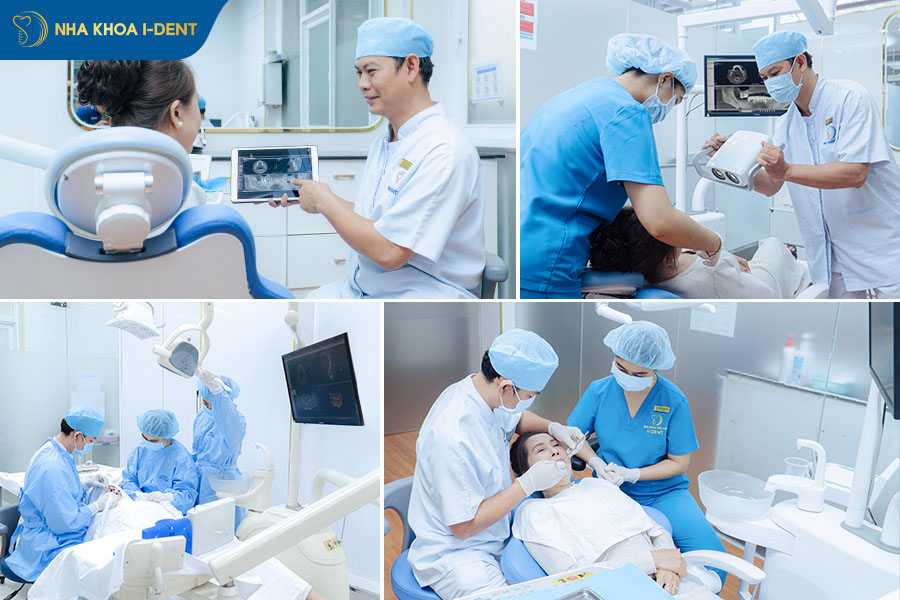
The dental implant procedure is a carefully planned, multi-step process designed to restore missing teeth with stable and natural-looking replacements. The approach may vary depending on the type of implant, jawbone condition, and overall oral health, but the process generally follows these main steps:
- Step 1: Consultation & Evaluation
The first step involves a thorough dental examination, including X-rays or a 3D CT scan, to assess bone density, gum health, and the overall condition of your mouth. During this consultation, your dentist will discuss your goals, review your medical history, and develop a personalized treatment plan.
- Step 2: Implant Placement Surgery
Once you’re ready, the implant post a screw-like titanium structure is surgically placed into your jawbone. This procedure is usually performed under local anesthesia, sedation, or general anesthesia, depending on the complexity and patient preference. After placement, the implant serves as a stable artificial root for your new tooth.
- Step 3: Healing & Osseointegration
After surgery, the jawbone gradually fuses with the implant in a process called osseointegration. This healing phase typically takes several months (3–6 months) and is crucial for ensuring long-term stability. During this time, temporary restorations may be used to maintain function and aesthetics.
- Step 4: Abutment & Crown Placement
Once the implant is fully integrated, an abutment is attached to connect the implant post to the final restoration. Finally, a custom-made dental crown is secured to the abutment. The crown is designed to match your natural teeth in color, shape, and size, providing a seamless and functional smile.
5. Risks of Dental Implants
Like any surgical procedure, dental implant surgery carries some risks, though they are generally rare and manageable. Common risks include:
- Infection at the implant site
- Injury or damage to surrounding teeth or blood vessels
- Nerve damage causing pain, numbness, or tingling in the gums, lips, or chin
- Sinus problems if implants in the upper jaw extend into the sinus cavity
Choosing an experienced dental professional can help minimize these risks.
6. Frequently Asked Questions (FAQs)
6.1. Who Is a Good Candidate for Dental Implants?
Ideal candidates have healthy gums, sufficient jawbone density, and no uncontrolled medical conditions that could affect healing. Smokers or patients with certain chronic illnesses may need additional evaluation, and some cases may require bone grafting before implant placement.
6.2. Are Dental Implants Painful?
Most patients experience minimal discomfort. Local anesthesia or sedation is used during the procedure, and post-surgery soreness is typically mild and managed with over-the-counter pain medication.
6.3. How Long Does the Procedure Take?
The full process can take several months, including consultation, implant placement, healing (osseointegration), and crown attachment. Individual timelines vary depending on the type of implant and healing response.
6.4. Does Insurance Cover Dental Implants?
Coverage varies by plan. Some dental insurance policies may cover part of the procedure, such as the crown or consultation, but implants are often considered elective. Many clinics offer financing or payment plans to make treatment more affordable.
Dental implants provide a reliable and long-lasting solution for missing teeth, restoring both function and natural appearance. With several types available, they can be tailored to meet individual needs and jawbone conditions. Understanding the procedure, benefits, and potential risks helps patients make informed decisions. By choosing a qualified dental professional, you can enjoy a confident smile, improved chewing, and long-term oral health.
SPECIALIZED IN IMPLANT DENTISTRY FOR VIETNAMESE PATIENTS


- Branch 1:19U-19V Nguyễn Hữu Cảnh, P.Thạnh Mỹ Tây (Quận Bình Thạnh cũ), TP.HCM
- Branch 2:193A - 195 Hùng Vương, P.An Đông (Quận 5 cũ), TP.HCM
- Branch 3:83 Đường số 3 KDC Cityland, P.Gò Vấp (Quận Gò Vấp cũ), TP.HCM